What is nonlinearity ?

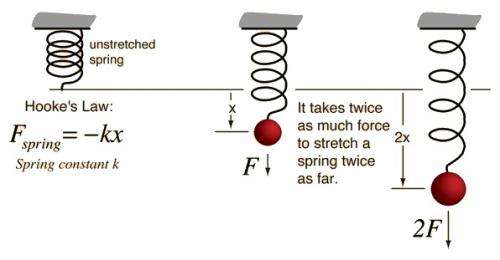
As a classic example, consider a spring with a spring constant of 1 N/mm. If we apply a force of 1 N, the spring elongates by 1 mm. If we apply 2 N, it elongates by 2 mm. In other words, the relationship is linear. You have probably heard of Hooke’s Law. Robert Hooke demonstrated that there is a proportional relationship between force and displacement, expressed by the equation:
F = k·u
Geometric Nonlinearity
This occurs when large deformations are present. For example, consider a fishing rod bending under the weight of a fish. As the load increases, the deformation becomes significant enough that linear assumptions are no longer valid.

Material Nonlinearity
Ductile materials have a yield point. Up to this point, the material behaves in a linear-elastic manner. Once the yield point is exceeded, plastic deformation begins, and the proportional relationship between stress and strain deviates from linearity.
Contact Nonlinearity
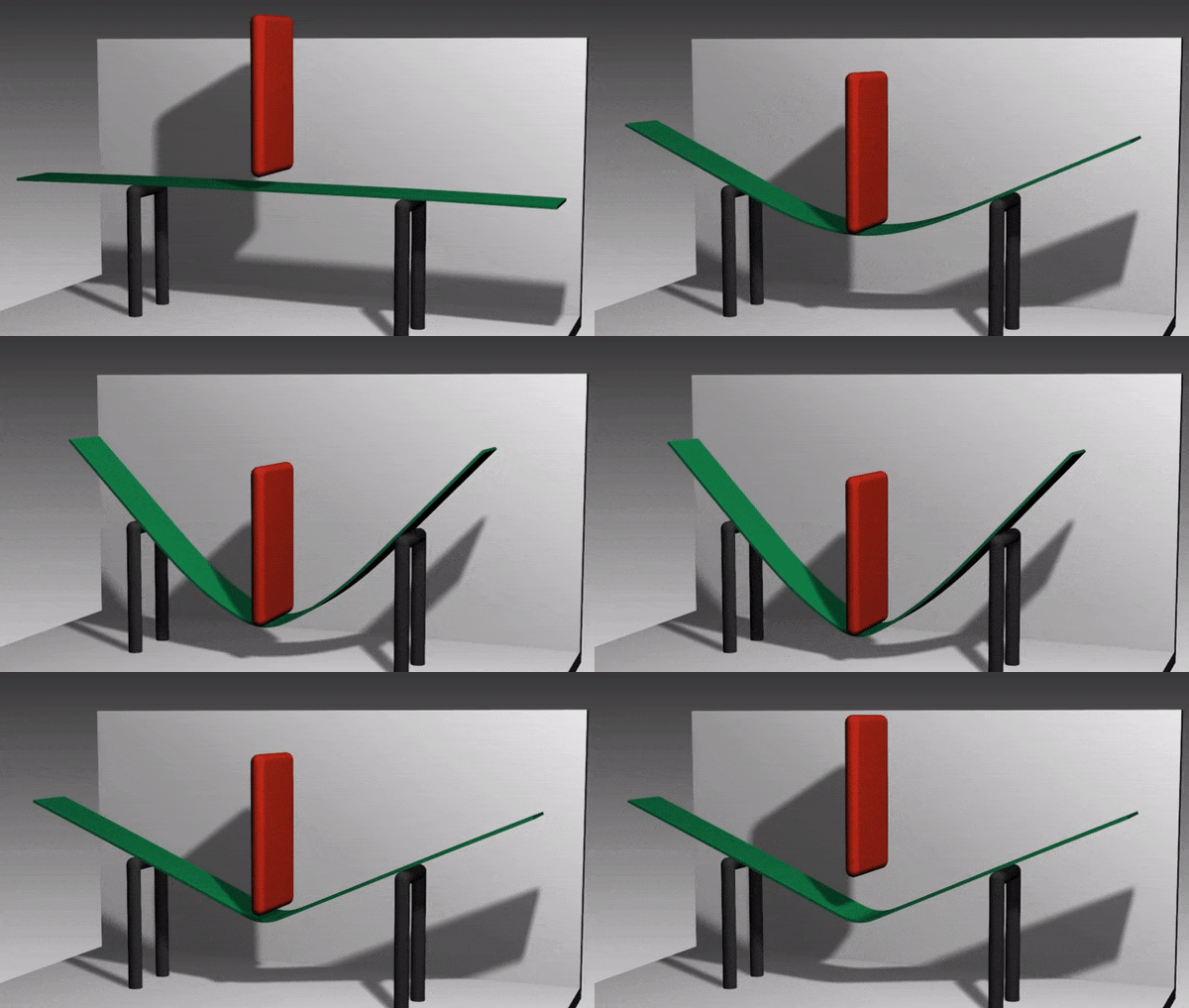
Contact nonlinearity arises when contact conditions change over time or have the potential to change during the analysis. In ANSYS, bonded and no separation contacts are considered linear, whereas frictional, frictionless, and rough contact types introduce nonlinear behavior.

In finite element analysis, linear-elastic analyses are often preferred because they provide results quickly and efficiently. In some cases, engineering standards define the appropriate analysis methodology. For example, ASME Section VIII, Division 2, Part 5 accepts linear-elastic analysis for pressure-containing equipment.
In ANSYS, one of the simplest ways to introduce geometric nonlinearity is by enabling the Large Deflection option in the analysis settings. This causes the stiffness matrix to be updated during the solution process, allowing geometric nonlinear effects to be captured. It is generally recommended to activate this option when using nonlinear contact definitions or when significant displacements and rotations are expected. If plastic strain needs to be evaluated, a nonlinear material model must also be defined.
Introduction to Nonlinear Finite Element Analysis Using OptiStruct
I created this post both as a way to reinforce my own understanding and to share what I have learned so far. If you notice any inaccuracies, please feel free to point them out in the comments.
Knowledge grows when it is shared.
Yorumlar
Yorum Gönder